





 2026/07/13
Introduction
Prefabricated steel construction leads Vietnam’s booming building sector. Fueled by steady GDP growth, ongoing infrastructure investment and continuous inflow of foreign manufacturing capital, Vietnam stands out as one of Southeast Asia’s most promising construction markets. Driven by national policies mandating faster project delivery, demand for localized Vietnam prefabricated steel solutions has grown rapidly. Developers and architectural firms are increasingly exploring tailored steel structure designs that fit local narrow lots and TCVN regulatory requirements.
This article delivers objective industry insights supported by official statistics from the Vietnam Steel Association (VSA) and the Ministry of Vietnam Construction, as well as real-world prefabricated building cases shared by international architecture platforms. It targets real estate developers, project owners and design institutes, providing practical references for residential & commercial structural scheme selection.
I. Emerging Demand for Prefabricated Steel Structures in Vietnam’s 2026 Construction Market
1.1 Steel Consumption Remains the Core Driver of Civil Construction
Vietnam ranks first in Southeast Asia for prefabricated steel consumption, backed by credible industry forecasts:
1. The Vietnam Steel Association (VSA) February 2026 report predicts national finished steel consumption will hit 26 million tons this year, with sales volume rising by 8%–10%. Finished steel output is expected to reach 33–34.5 million tons, while crude steel production will likely exceed 27 million tons, hitting a five-year high.
2. Construction accounts for 89% of total domestic steel consumption, with machinery, home appliances, automobiles and oil & gas collectively making up the remaining 11%, confirming civil building as the core demand track for Vietnam prefabricated steel.
3. Vietnam’s GDP reached USD 476.3 billion in 2024 with a 7.09% year-on-year growth rate. The industrial and construction sectors contributed 45.17% to GDP growth, maintaining a long-term high-growth cycle for modular building projects.
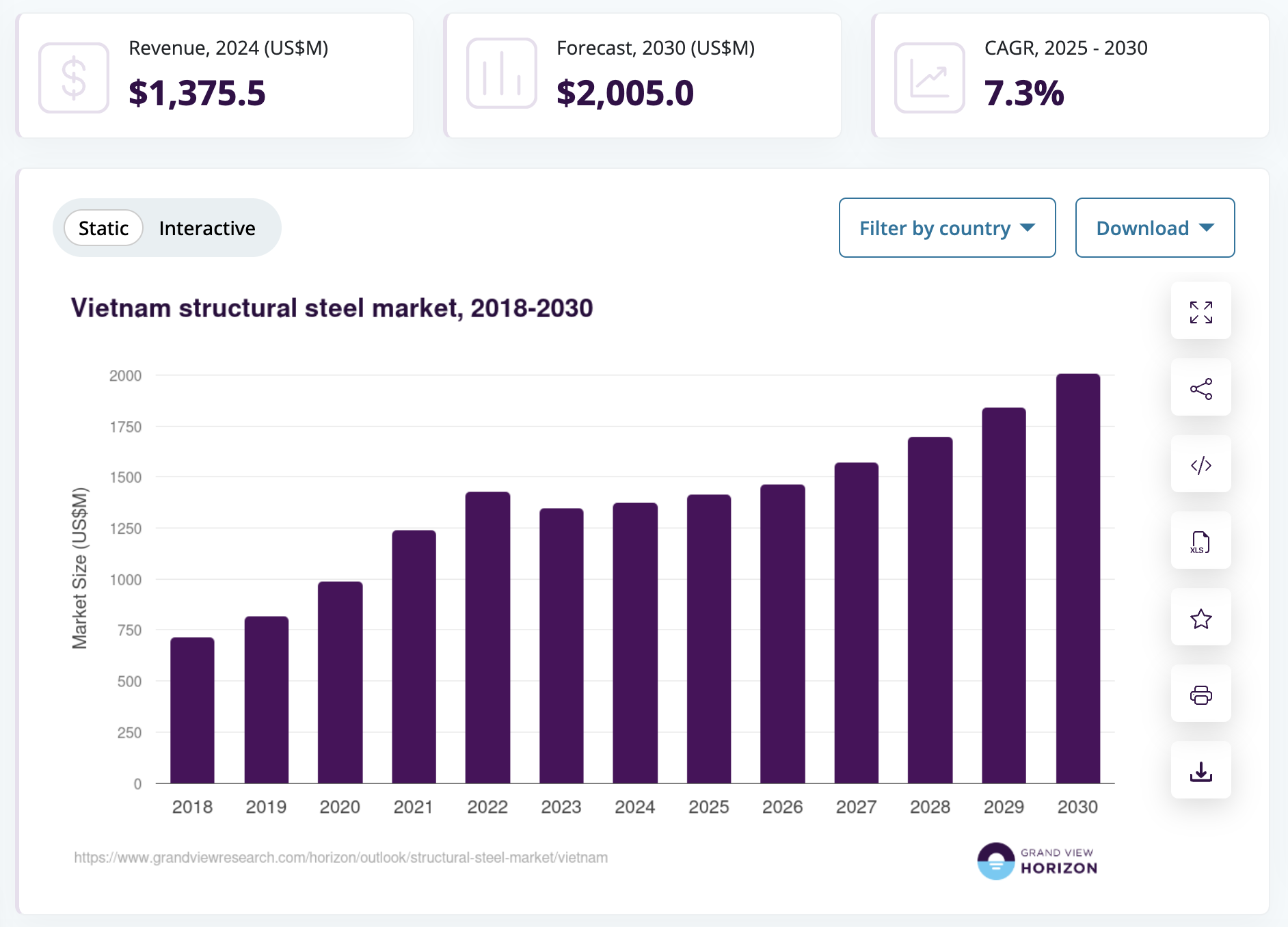
1.2 Real Estate Recovery Drives Surge in Residential and Commercial Prefab Projects
Three landmark real estate laws, including the Land Law and Housing Law, took effect in August 2024, removing long-standing project approval bottlenecks and kickstarting a strong market rebound. Official data released by the Ministry of Construction in early 2025 shows around 70,000 new apartments launched in 2024, nearly triple the figure of 2023. In Q4 2025 alone, Ho Chi Minh City and Hanoi supplied over 66,000 new residential units, pushing full-year housing supply up nearly 50%. High-end apartments, mixed-use complexes and resort hotels saw significant growth in new prefab steel starts.
Global manufacturers such as Samsung, Foxconn and VinFast keep expanding Vietnamese production facilities. Foreign direct investment in manufacturing reached USD 38.42 billion in 2025, generating steady demand for supporting prefabricated residential and commercial buildings.
Demand varies distinctly across Vietnam’s three core regions: Southern hubs including Ho Chi Minh City, Binh Duong and Dong Nai attract abundant foreign investment and strong demand for narrow-lot luxury residences and shopping complexes. Northern areas centered on Hanoi and Bac Ninh mainly supply industrial staff housing. Central zones like Da Nang and Hue focus on riverside tourism real estate requiring flexible modular steel frames. These regional land differences directly influence local Vietnam steel structure design choices.
1.3 National Policies Accelerate the Adoption of Vietnam Prefabricated Steel
Vietnam has rolled out a set of construction upgrade policies to shorten build timelines and streamline approvals (Sources: MOC official website, LuatVietnam legal database). Central authorities require all provincial-level key real estate & infrastructure projects to cut construction cycles by 3 to 6 months. Digital drawings and electronic inspection documents carry equal legal weight, creating institutional support for fast-track prefabricated steel construction compliant with TCVN codes.
The 5-storey prefabricated resettlement housing project in Bac Ninh serves as the Ministry of Construction’s 2026 key demonstration scheme, fully proving official support for modular building technology. Traditional cast-in-place concrete relies on lengthy pouring and curing cycles; site-level adjustments alone cannot meet government timeline limits, pushing designers to evaluate Vietnam prefabricated steel at schematic stage.
1.4 Unique Narrow Local Plots Call for Flexible Prefabricated Steel Layouts
Vietnamese urban residential lots feature a unique narrow-width, deep-depth layout summarized by local architectural research: typical plots measure only 4–7 meters wide but stretch up to 35 meters deep, capped at around five floors due to high land costs. Rigid cast-in-place concrete frames cannot deliver open, customizable layouts favored by high-end home and retail buyers.
Cast-in-place concrete still dominates low-budget civil works, yet prefabricated steel solutions gain growing traction for premium tourism and commercial developments matching TCVN standards:
1. Serene House (Ho Chi Minh City, Module K, 2017): Mixed prefabricated steel residential complex completed in just three months with demountable modular frames.
2. Red Loft (Hue, DUHA Architects, 2025): Riverside modular steel vacation villa with all components prefabricated off-site to fit local tourist land limits.
These two real projects verify the technical and commercial viability of Vietnam prefabricated steel for high-end civil developments, marking a clear industry upgrade trend.
II. Comparison of Mainstream Structural Systems & Core Civil Design Pain Points
2.1 Limitations of Cast-in-Place Reinforced Concrete
Concrete fits low-cost social housing but carries obvious drawbacks for Vietnam’s high-end villas and commercial buildings:
1. Restricted spatial flexibility: Thick monolithic cast beams block wide open atriums required by malls and hotels, leading to costly space reformation for future tenant adjustments.
2. Extended capital occupation cycle: Concrete requires mandatory 7–28 days of on-site curing, stretching construction schedules and accumulating construction loan interest. Under Vietnam’s 3–6 month timeline mandate, pure concrete schemes often fail priority project approval.
3. Poor mass housing replicability: Irregular on-site casting errors make unified apartment blueprints hard to reuse for large residential estates.
4. Higher seismic upgrade costs: Enlarged concrete beam sections are needed to meet TCVN seismic standards, shrinking usable indoor living space.
2.2 Market Focus of Domestic Vietnamese Steel Fabricators
Major local steel manufacturers mainly develop large-span frames for industrial plants, airports and public municipal works. Standardized modular frames optimized for Vietnam’s narrow-lot mid-rise apartments and compact mixed-use commercial buildings remain scarce, creating an untapped niche for professional prefabricated steel solutions.
Local steel fabricators also face systemic operational bottlenecks recorded in Mordor Intelligence Jan 2026 Vietnam steel report: A widespread shortage of certified welders and NDT technicians inflates field labor costs and delays welded construction progress. New 2025 environmental emission regulations force small workshops to invest heavily in pollution control equipment. Imported steel coil price volatility further squeezes small manufacturers’ profit margins, leaving few local suppliers capable of delivering ±0.5mm precision modular steel for residential & commercial TCVN-compliant projects.
2.3 SEP Full Bolted Prefabricated Steel System: Optimized Solution for Vietnam Residential & Commercial Projects
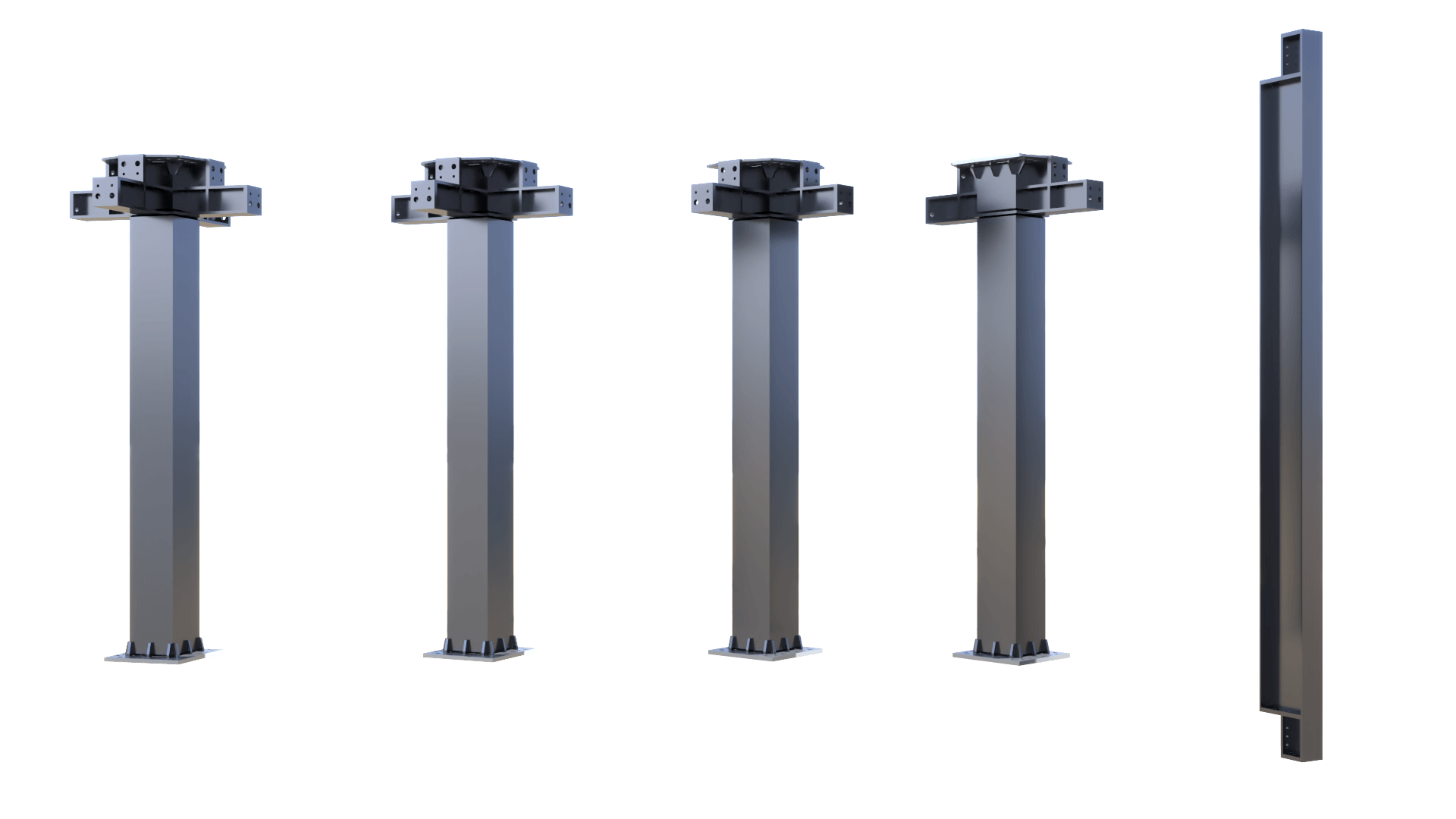
Developed independently to solve global fast-build and flexible layout demands, our SEP full bolted prefabricated steel system perfectly adapts to Vietnam’s narrow urban lots and national fast-track construction policies, with four core localized strengths matching TCVN standards:
1. Greater Spatial Flexibility
Bolt-connected modular steel frames eliminate bulky cast beams and columns, creating wide open layouts suitable for malls, hotels and luxury villas. Modular units can be freely combined to fit 4–7m narrow Vietnamese urban lots, and standardized structural drawings can be reused across mass high-rise residential developments to lift project premium value.
2. Fully Aligned with National Fast-Track Mandates
All structural components are prefabricated off-site, requiring only on-site bolt assembly — no field welding or concrete curing needed. Total construction timeline is cut by 50% compared with concrete buildings, drastically shortening capital payback cycles and easing developer financing pressure.
3. Superior Prefabrication Precision (±0.5 mm Tolerance)
Factory controlled machining eliminates dimensional deviations caused by on-site concrete pouring. Vietnam operates an independent TCVN building code system; all SEP structural proposals can be adjusted during design to fully comply with local construction specifications.
4. Reliable TCVN-Compliant Seismic Performance:
Standardized SEP bolt joints have passed full mechanical load testing, delivering better seismic performance than traditional concrete frames. The system meets all local safety codes and cuts long-term building insurance and structural maintenance expenses.
From full-lifecycle investment perspective, raw concrete material costs are lower upfront, yet long construction cycles drive up financing and on-site labor spending. While the SEP bolted prefabricated steel system requires slightly higher initial steel investment, it drastically cuts capital occupation and future renovation costs, delivering superior total ROI for self-operated shopping malls, hotels and high-end Vietnam residential estates.
III. Structural Selection Guide for Vietnam Different Project Types
Based on project positioning, cost sensitivity and holding cycles, developers and Vietnam design institutes can reference this clear classification of prefabricated steel vs concrete:
Suitable Scenarios for SEP Prefabricated Steel Structures
1. Luxury villas, riverside & scenic resort hotels: Property owners prioritize construction speed and open modular layouts with moderate cost sensitivity; SEP prefabricated steel greatly boosts the market value of tourism real estate matching local narrow plots.
2. Mixed-use shopping complexes & multi-story street retail: Commercial assets demand flexible store layouts for frequent tenant format changes, where bolted steel’s low reformation cost creates long-term advantages.
3. Mass standardized high-rise apartments: Reusable SEP modular structural drawings amortize upfront design costs and speed up mass housing delivery to match Vietnam’s growing residential supply demand.
Scenarios Where Reinforced Concrete Remains More Competitive
1. Affordable social housing & small 2–3 storey private self-build homes: Strict total construction budgets erase the full-lifecycle benefits of prefabricated steel systems.
2. Single-story auxiliary gatehouses & mechanical equipment rooms: Simple low-span structures cannot reflect the standardization and speed advantages of modular prefabricated steel.
Critical neutral industry reminder: Structural suitability cannot be judged solely by project type. Developers must evaluate local lot geometry, investment holding cycle and regional construction supply chains together; multi-scheme comparison at schematic design is strongly recommended.
Vietnam’s structural steel fabrication market stays highly fragmented without leading national manufacturers. Major local suppliers including Hoa Phat, ATAD, PEB Steel and Zamil Steel mainly produce standardized industrial warehouse frames. Few domestic factories develop dedicated modular steel systems for narrow urban residential lots, high-rise mixed-use buildings and tourism resorts — creating clear market opportunities for our SEP full bolted prefabricated steel solution.
IV. Collaborative Framework for Vietnam Early-Stage Prefabricated Steel Planning
Schematic design is the critical decision window for selecting Vietnam prefabricated steel or concrete structures. For local Vietnamese design institutes and real estate developers, three compliant cross-border cooperation paths are available:
1. Multilingual Technical Documentation Planning
If expanding long-term Vietnam market layout, we can compile multi-lingual SEP structural manuals and standard joint detail drawings to reduce communication friction with local TCVN-licensed architects.
2. Joint Preliminary Structural Design
Cooperate with MOC-qualified local Vietnamese design firms to finish structural layouts and load calculations, ensuring all SEP prefabricated steel drawings fully align with TCVN 5575 steel standard and TCVN 9386 seismic code.
3. Localized Prefabricated Steel Reference Case Development
Prioritize small-scale luxury residential or auxiliary commercial pilot projects to complete full SEP prefabricated steel design sets, creating visual local samples to popularize modular building technology across Vietnam’s construction industry.
V. Consultation Channel for Vietnam Prefabricated Steel Technical Exchange
This article only provides objective industry sharing around Vietnam prefabricated steel and civil construction trends. Real estate developers and architectural institutes planning residential, hotel or mixed-use Vietnam projects may submit consultation requests via the official website to schedule targeted technical exchanges. Our team can share aggregated official industry policies and local prefabricated steel project portfolios.
About HHBT
We are HHBT, a pioneering company founded in 2019. We provide end-to-end construction solutions, from digital design to smart manufacturing and final assembly, redefining architectural industry with greater efficiency, precision, and sustainability.